Rainforest Biodiversity Group has opened our small grant program to provide funding for projects that lead to the conservation of biodiversity within the Neotropics. This fund is available to graduate students and 501c3 non-profit organizations or equivalent and can be species-specific (flora or fauna) or site-specific work.
The grant may be used to support scientific research (both quantitative and qualitative), environmental education, sustainable economic development (eco-tourism, e.g.) and other conservation activities provided that the applicant can demonstrate how the project will support and protect biodiversity or its habitat and help Rainforest Biodiversity Group complete its mission.
In recognition that $2000 is not likely to fund a project in its entirety, prioritization for funding will go to the project that can demonstrate that the funds from this small grant program will be of critical importance to the completion and successful implementation of a project that is providing value for wildlife habitat, or wildlife conservation. This grant does not require matching funds of any kind, but it will be to the applicant’s advantage to show that these funds are being complemented by counterpart funding (either cash or in-kind) or that the funds can be leveraged for further funding from another source.
Deadline for applications is March 15, 2012. For an application and more information on guidelines, please visit the website here.
Monday, March 12, 2012


Saturday, December 3, 2011
Maquenque Bird Count to be held on Saturday, January 7th

We are still looking for volunteers for this year's Maquenque Bird Count to be held on Saturday, January 7th. In 2011, we had 18 volunteer ornithologists and experienced bird guides, together they were able to log an amazing 241 species and 3,662 individual birds! Click here to see the 2011 Maquenque Count results.
We are trying to survey the area as thoroughly as possible, so the more birders the better! If you would like more information about each of the birding sites locations you can check out our map or visit the Costa Rican Bird Route website at http://www.costaricanbirdroute.com/sites.htm. If you would like to share your photos of this year's event we would love to post some of them to our website. Please send your photos to Daniel at birdmandaniel@gmail.com.
Food and Lodging- To save some money, participants might want to bring their own food. Rooms are limited and will be filled on a first come, first served basis.
Transport - The Rainforest Biodiversity Group will once again be reimbursing participants for gas or for their bus tickets (economy class please, as our funds are limited). Just save your gas or bus receipt if you would like to be reimbursed. I can try to help arrange transportation to the site from a nearby town.

Please let me know: A) which of the following sites you would like to bird at; B) if you have transportation to get there; C) how many people are in your birding group.
- Maquenque Ecolodge - Has 2 double rooms with 2 beds each available at no cost. Breakfast is included. All other meals available for purchase.
- Finca Pangola - Has a volunteer house with 3 beds remaining at no cost. No meals are provided but the house has a full kitchen. There is also food nearby for a price of 2000-2500 per meal.
- Quebrada Grande - Volunteers will be placed in a house near by the count area. There will be food available, most likely at a reduced cost to the volunteer.
- Mi Pedacito de Cielo - is offering a special rate of 10,000. 00 colones per double room, breakfast 2500 colones, dinners and lunches are 5000 colones a piece.
- Laguna Lagarto Lodge - is offering a special rate of 10,00.00 colones per person per day which includes accommodation, breakfast, lunch and dinner.
- Bosque Tropical del Toro - lodging is yet to be determined, but there will likely be 6 beds available at no cost. Food will likely be available for purchase at a price of 2000-2500 per meal.
__________________________________________________
Hola a todos observadores de aves!!
Todavía estamos buscando voluntarios para el Conteo de Aves de Maquenque el sábado, enero 7. En 2011, tuvimos 18 ornitólogos y voluntarios experimentados guías de aves, y fueron capaces de registrar un increíble 241 especies y 3.662 aves individuales! Haga clic aquí para ver los resultados del Conteo Maquenque en 2011.
Estamos tratando de reconocer el área con el mayor rigor posible, por tanto, el más observadores de aves la mejor! Si desea obtener más información acerca de cada uno de los sitios para el avistamiento lugares usted puede consultar nuestro mapa o visitar la Ruta de Aves de Costa Rica en sitio web http://www.costaricanbirdroute.com/sites.htm.
 Si quieres compartir tus fotos del evento de este año nos encantaría puesto algunos de ellos a nuestra página web. Por favor envía tus fotos a Daniel en birdmandaniel@gmail.com.
 La Comida y El Alojamiento - ahorrar algo de dinero, los participantes desean llevar su propia comida. Las habitaciones son limitadas y se llena de un primer llegado, primer servido base.
 Transporte - El Rainforest Biodiversity Group será otra vez reembolsar los participantes de gas o de sus billetes de autobús (en clase económica por favor, como nuestros fondos son limitados). Solo hay que guardar el gas o el autobús recibo si le gustaría ser reembolsados. Puedo intentar ayudar organizar el transporte hasta el sitio de la ciudad vecina.
 *****Por favor, hágamelo saber: A) cuáles de los siguientes sitios en los que usted desea ir; (B) si tiene transporte para llegar hasta allí; (C) ¿cuántas personas están en tu grupo. *****
1. Maquenque Ecolodge - Dispone de 2 habitaciones dobles con 2 camas cada uno disponible sin costo alguno. El desayuno está incluido. Todas las otras comidas disponibles para su compra.
2. Finca Pangola - Cuenta con un voluntario casa con 3 dormitorios restantes sin costo alguno. No servimos comidas pero la casa tiene una cocina completa. También hay comida cerca a un precio de 2000-2500 por comida.
3. Quebrada Grande - Los Voluntarios serán depositadas en una casa en el área de conteo. Habrá comida disponible, lo más probable es a un costo reducido para los voluntarios.
4. Mi Pedacito de Cielo - está ofreciendo una tarifa especial de 10.000. 00 colones por habitación doble, desayuno 2500 colones, cenas y comidas son una pieza 5000 colones.
5. Laguna Lagarto Lodge - está ofreciendo una tarifa especial de 10,00.00 colones por persona y día que incluye alojamiento, desayuno, almuerzo y cena.
6. Bosque Tropical del Toro - alojamiento aún está por determinarse, pero probablemente habrá 6 camas disponibles sin costo alguno. Alimentos probablemente estará disponible para su compra a un precio de 2000-2500 por comida.
Gracias!
Daniel
Friday, October 28, 2011
Hawk Migration!
The following pictures were sent in by Gary Moll of the Costa Rican Bird Route site Finca Pangola. Each year, the hawk migration in Costa Rica is a special treat for those fortunate enough to witness it. Thanks for sharing, Gary!


Friday, July 22, 2011
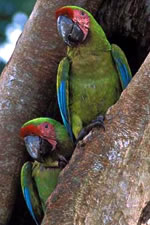
RBG Donates to Support Bonaire Parrots

Earlier this month, 112 endangered parrots and endemic parakeets were illegally taken by poachers on Bonaire, bound for the pet trade on neighbouring Curacao. Thanks to the efforts of the Bonaire National Parks Foundation (STINAPA) and the island's police force, these birds were confiscated and entrusted to Echo, a non-profit organization that protects the parrots of Bonaire.
The birds were unfed while in possession of the poachers and were therefore starving and near death. The crew at Echo began working around the clock to mix food and hand feed all of these chicks.
There are currently 82 unweaned chicks which the Echo team are now hand feeding. This is a tremendous strain on their limited resources. The organization has received emergency aid from World Parrot Trust which covers the immediate needs of these parrots. The groups has already successfully released other confiscated illegal pet Amazon parrots, and hope to return all 112 of these parrots to the wild too.
Rainforest Biodiversity Group recently made a donation to help out with this effort. The organization has done an amazing job fundraising and have now reached their goals for raising enough money to take care of the immediate needs of the birds. They are continuing to accept donations, however, in order to protect these birds long-term by conducting anti-poaching campaigns, public education, nest site management, breeding research and habitat restoration efforts.
Follow this link to make your own donation to the effort.
Tuesday, June 14, 2011
Happenings at Costa Rican Bird Route Site Finca Pangola
By: Holly Robertson, President, Rainforest Biodiversity Group
On the occasions that I have had the privilege of visiting Finca Pangola, it is never dull. This last visit was certainly no exception. At Finca Pangola/Cinco Ceibas, there is always activity to be found as the site develops to be a premier tourism destination within the Costa Rican Bird Route. While plans for the site's eco-lodge will have to be put on hold until next year, the site continues to develop its world class boardwalk and day trip program.

The name Cinco Ceibas is a reference to the five amazingly large ceiba trees to which the boardwalk will take you. And of course, there is no shortage of other vegetation under the canopy to intrigue and delight you along the way. In an effort to identify these species and produce a self-guided interpretive tour, Finca Pangola management invited a research team from May 25-29 from Purdue University led by Lori Snyder, Assistant Professor of Agronomy and researcher on sustainable cropping systems in the humid tropics.
Lori, assisted by a traditional medicine man from the Costa Rican Maleku tribe, was making her third visit to Finca Pangola to complete species identification. The medicine man, Alex, was helping with the I.D. as well as supplying anecdotal information about the traditional uses of the plants.

Also along with Lori was a group of undergraduate students from Purdue on a three week field course on sustainable agroforestry in the tropics. During this three week course in Costa Rica, the students visit farms as well as the EARTH University and other locations to see examples and hear from farmers in Costa Rica. This year is the first year that the students taking this course have included Finca Pangola into their itinerary, and hopefully it will not be the last. While at Finca Pangola the students broke into teams and collected soil samples, water samples, and took measurements of trees to be analyzed for quality as well as future research possibilities.
The more than 1,000 acres of Finca Pangola provides ample opportunities for possible research. Those 1,000 acres consist of sustainable teak plantation, agriculture production, primary rainforest, riparian habitat, lagoons and wetlands. Rainforest Biodiversity Group looks forward to collaborating with Purdue on possible research ideas at the site in the future.
After meeting with the students, myself and the upper management team of Henk, Peter, and Gary were heading back to the main house when we came upon the site workers trying to unearth a tree from the riverbed. It is a fairly common occurrence that trees fall naturally and then are washed down the river, only to become lodged somewhere along the way. If enough of them get lodged at the same location, it can cause a backup of water and subsequent issues. Not only that, but the tree is valuable construction timber that can be salvaged, and will save a standing live tree from being cut! Once the tree dries, it is just as strong, and the wood can be that much more beautiful and unique as it has taken on markings and striations from the river water.
The workers at Finca Pangola, all hired from the surrounding community, were doing their best to retrieve one of the several logs lodged underneath the bridge on the site. However, it became apparent that they needed more hands. Never ones to be shy about getting dirty (or wet) Henk, Gary and Peter found themselves waist deep in the effort.

It was a solid afternoon of strategizing and effort, but eventually the log was freed and is drying at the lumber site!

Never a dull time, indeed!
On the occasions that I have had the privilege of visiting Finca Pangola, it is never dull. This last visit was certainly no exception. At Finca Pangola/Cinco Ceibas, there is always activity to be found as the site develops to be a premier tourism destination within the Costa Rican Bird Route. While plans for the site's eco-lodge will have to be put on hold until next year, the site continues to develop its world class boardwalk and day trip program.

The name Cinco Ceibas is a reference to the five amazingly large ceiba trees to which the boardwalk will take you. And of course, there is no shortage of other vegetation under the canopy to intrigue and delight you along the way. In an effort to identify these species and produce a self-guided interpretive tour, Finca Pangola management invited a research team from May 25-29 from Purdue University led by Lori Snyder, Assistant Professor of Agronomy and researcher on sustainable cropping systems in the humid tropics.
Lori, assisted by a traditional medicine man from the Costa Rican Maleku tribe, was making her third visit to Finca Pangola to complete species identification. The medicine man, Alex, was helping with the I.D. as well as supplying anecdotal information about the traditional uses of the plants.

Also along with Lori was a group of undergraduate students from Purdue on a three week field course on sustainable agroforestry in the tropics. During this three week course in Costa Rica, the students visit farms as well as the EARTH University and other locations to see examples and hear from farmers in Costa Rica. This year is the first year that the students taking this course have included Finca Pangola into their itinerary, and hopefully it will not be the last. While at Finca Pangola the students broke into teams and collected soil samples, water samples, and took measurements of trees to be analyzed for quality as well as future research possibilities.
The more than 1,000 acres of Finca Pangola provides ample opportunities for possible research. Those 1,000 acres consist of sustainable teak plantation, agriculture production, primary rainforest, riparian habitat, lagoons and wetlands. Rainforest Biodiversity Group looks forward to collaborating with Purdue on possible research ideas at the site in the future.
After meeting with the students, myself and the upper management team of Henk, Peter, and Gary were heading back to the main house when we came upon the site workers trying to unearth a tree from the riverbed. It is a fairly common occurrence that trees fall naturally and then are washed down the river, only to become lodged somewhere along the way. If enough of them get lodged at the same location, it can cause a backup of water and subsequent issues. Not only that, but the tree is valuable construction timber that can be salvaged, and will save a standing live tree from being cut! Once the tree dries, it is just as strong, and the wood can be that much more beautiful and unique as it has taken on markings and striations from the river water.
The workers at Finca Pangola, all hired from the surrounding community, were doing their best to retrieve one of the several logs lodged underneath the bridge on the site. However, it became apparent that they needed more hands. Never ones to be shy about getting dirty (or wet) Henk, Gary and Peter found themselves waist deep in the effort.

It was a solid afternoon of strategizing and effort, but eventually the log was freed and is drying at the lumber site!

Never a dull time, indeed!
Friday, April 22, 2011
The Man Behind Earth Day: Wisconsin Senator Gaylord Nelson
From NelsonEarthDay.net:
Gaylord Nelson, the ambitious junior senator from Wisconsin, grew accustomed to disappointment in the 1960s. In his first Senate speech, supporting a bill banning phosphates in detergents, he insisted that "we need this...just as desperately as we need the defense against atomic missiles." That did not stop his fellow legislators from voting down the bill, just as similar pleas could not win him a single co-sponsor for his 1966 bill banning DDT. While he was able to lure President Kennedy to take a "conservation tour" of Wisconsin and the West in 1963, he watched helplessly as the President, the press, and audiences preferred to debate taxes and Cold War politics.
Gaylord Nelson,
the ambitious junior senator from Wisconsin, grew accustomed to disappointment in the 1960s. In his first Senate speech, supporting a bill banning phosphates in detergents, he insisted that "we need this...just as desperately as we need the defense against atomic missiles." That did not stop his fellow legislators from voting down the bill, just as similar pleas could not win him a single co-sponsor for his 1966 bill banning DDT. While he was able to lure President Kennedy to take a "conservation tour" of Wisconsin and the West in 1963, he watched helplessly as the President, the press, and audiences preferred to debate taxes and Cold War politics. To wake up Washington, he would need a new plan.
The idea came to him in August of 1969 after surveying the oil spill in Santa Barbara. For the past few years, college students had been staging teach-ins to educate their campuses about the war in Vietnam. What if, Nelson wondered, students used the same forum to raise environmental awareness, and what if they coordinate their events to fall on the same day, grabbing headlines and sending a strong environmental message to the Capitol? He proposed the idea in front of a small, fledgling conservation group in Seattle on September 20. A short wire story broadcast the idea.
Seven months later Nelson's idea resulted in the largest demonstration in U.S. history. Millions of Americans observed Earth Day in April 1970, whether in groups of tens of thousands in New York or Philadelphia or with events big and small at thousands of colleges and schools across the country. While Nelson with his staff worked tirelessly to promote the day and coordinate select events, he would grow fond of saying Earth Day "organized itself." Nelson encouraged all Americans to celebrate the day "in any way they want."
For the first time, the Earth Day stage gathered together the diverse constituents of the modern environmental movement: youthful idealists, liberal Democrats, middle-class women, scientists, professionals, and representatives of conservation groups, labor unions, and churches.
Addressing the Earth Day 1970 audience in Denver, Nelson proclaimed, "Our goal is not just an environment of clean air and water and scenic beauty. The objective is an environment of decency, quality and mutual respect for all other human being and all living creatures."
Click here to watch videos of Gaylord Nelson speaking about the environment and Earth Day.
Tuesday, March 1, 2011
New Bird Species Discovered in Madagascar
From Mongabay.com
The rich and unique biodiversity of Madagascar has a new member: a forest dwelling bird in the rail family, dubbed Mentocrex beankaensis. In 2009 US and Malaygasy scientists conducted a survey in Madagascar's dry Beanka Forest. They discovered several new species, of which the new rail is the first to be described.
"This bird they’ve known about for decades, but no one has been able to go find it and get a specimen of it," said Nick Block, a graduate student at the University of Chicago who studied the new birds molecular genetic told the Chicago Sun Times, describing the new species as 'not common at all'.
Similar to another Malagasy rail, researchers were able to show Mentocrex beankaensis is a new species with taxonomic and DNA studies.
The dry Beanka forests, where the species survived, rest on limestone, which in some cases have formed dramatic spires. The Beanka forest protected area is currently managed by Biodiversity Conservation Madagascar (BCM).
"We [BCM] have taken an approach to the conservation of the Beanka Forest resting on working in unison with local people to fulfill aspects of their economic and development needs and bestowing a sense of natural patrimony of the organisms that live in their forest. These are aspects critical for any long-term successful project. The discovery of this new species of bird and other organisms during the late 2009 expedition underlines the importance of our mission and the uniqueness of the Beanka Forest," the director of BCM, Aldus Andriamamonjy, said in a press release.

Artist's view of the Mentocrex beankaensis. Illustration by: Velizar A. Simeonovski. CITATION: Steve M. Goodman, Marie Jeanne Raherilalao, and Nicholas L. Block. Patterns of morphological and genetic variation in the Mentocrex kioloides complex (Aves: Gruiformes: Rallidae) from Madagascar, with the description of a new species. Zootaxa. 2776: 49-60 (2011).


The rich and unique biodiversity of Madagascar has a new member: a forest dwelling bird in the rail family, dubbed Mentocrex beankaensis. In 2009 US and Malaygasy scientists conducted a survey in Madagascar's dry Beanka Forest. They discovered several new species, of which the new rail is the first to be described.
"This bird they’ve known about for decades, but no one has been able to go find it and get a specimen of it," said Nick Block, a graduate student at the University of Chicago who studied the new birds molecular genetic told the Chicago Sun Times, describing the new species as 'not common at all'.
Similar to another Malagasy rail, researchers were able to show Mentocrex beankaensis is a new species with taxonomic and DNA studies.
The dry Beanka forests, where the species survived, rest on limestone, which in some cases have formed dramatic spires. The Beanka forest protected area is currently managed by Biodiversity Conservation Madagascar (BCM).
"We [BCM] have taken an approach to the conservation of the Beanka Forest resting on working in unison with local people to fulfill aspects of their economic and development needs and bestowing a sense of natural patrimony of the organisms that live in their forest. These are aspects critical for any long-term successful project. The discovery of this new species of bird and other organisms during the late 2009 expedition underlines the importance of our mission and the uniqueness of the Beanka Forest," the director of BCM, Aldus Andriamamonjy, said in a press release.

Artist's view of the Mentocrex beankaensis. Illustration by: Velizar A. Simeonovski. CITATION: Steve M. Goodman, Marie Jeanne Raherilalao, and Nicholas L. Block. Patterns of morphological and genetic variation in the Mentocrex kioloides complex (Aves: Gruiformes: Rallidae) from Madagascar, with the description of a new species. Zootaxa. 2776: 49-60 (2011).
Subscribe to:
Posts (Atom)


 Posts
Posts


